You Already Know What It Means. But Here's Why It Hits Different.
If you're Albanian, you didn't need Google to bring you here. You've seen the double-headed eagle your entire life, on your family's wall, tattooed on your cousin's arm, stitched into your grandmother's tablecloth, flying on the flag at every Independence Day rally from the Bronx to Zurich.
But here's the thing: most people outside our culture see a cool bird. We see 2,500 years of survival. We see Skanderbeg. We see our parents leaving everything behind so we could have everything ahead. We see identity.
So let's talk about what the Albanian double-headed eagle actually means, where it came from, why it matters, and why wearing it isn't fashion. It's a statement.

The Origin: Older Than You Think
The double-headed eagle didn't start with Albania. It's one of the oldest symbols in human history, found on Hittite seals from 3,000+ years ago, used by the Byzantine Empire, and adopted by dynasties across Europe. The eagle symbol was also used by Illyrian tribes, the ancestors of modern Albanians, and later by medieval Albanian nobility. But nobody made it theirs like the Albanians did.
The word Shqiptar, what Albanians call themselves, literally translates to "Sons of the Eagle" (from shqiponje, eagle). The connection between Albanians and the eagle isn't borrowed or aesthetic. It's etymological. It's in the name.
Skanderbeg: The Man Who Made It a Battle Flag
In 1443, Gjergj Kastrioti Skanderbeg raised the red flag with the black double-headed eagle and told the Ottoman Empire, the most powerful military force on Earth, to come and take it. For 25 years (1443-1468), they couldn't.
Skanderbeg wasn't just a general. He was the reason Albania exists. A small nation in the mountains held off an empire that conquered everything from Hungary to Egypt. The eagle on that flag became the symbol of Albanian resistance, Albanian stubbornness, Albanian refusal to disappear.
When Albania declared independence on November 28, 1912, they raised Skanderbeg's eagle. Same flag. Same energy. 500 years later.

What the Two Heads Mean
Everyone asks: why two heads?
The historical answer: the double-headed eagle represented the unity of East and West, the Byzantine tradition of watching over both horizons. For Albania, sitting at the crossroads of empires, this made literal sense. Always vigilant. Always watching. Nobody sneaks up on an Albanian.
There are other interpretations that run deep in Albanian culture:
- The union of Ghegs and Tosks, the two major Albanian subgroups, north and south, united under one symbol
- Church and state, reflecting Albania's unique religious harmony, where Muslims, Catholics, and Orthodox Christians coexist with respect
- Past and future, one head honors where we came from (ancestors, heritage, homeland), the other looks to where we're going (diaspora, growth, legacy). That's the Albanian way.
The Eagle in the Diaspora
Here's where it gets personal.
For the estimated 10 million Albanians living outside Albania and Kosovo, in New York, London, Zurich, Toronto, Detroit, Chicago, across Germany and Italy, in North Macedonia, Montenegro, Greece, and around the world, the eagle is more than a national symbol. It's a lifeline to identity.
When your parents moved to a new country, learned a new language, worked jobs they were overqualified for, and built a life from nothing, the eagle was the one thing that stayed. It hung in the living room. It was on the keychain. It was the tattoo your brother got at 18 without telling anyone.
You'll see the eagle everywhere in Albanian life:
- The hand gesture at celebrations, two hands crossed to form eagle wings
- Independence Day parades on November 28
- Football matches, the Albanian national team and fans worldwide
- Weddings, graduations, and family milestones
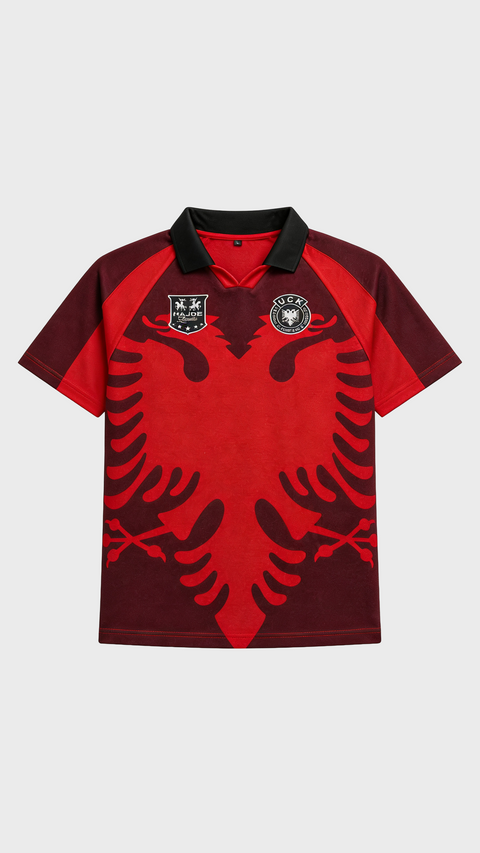
- Fashion, from streetwear to heritage pieces
Wearing the eagle in the diaspora says: "I made it here. But I'll never forget where I come from."

For Allies and Supporters
You don't have to be Albanian to respect the symbol. Plenty of people wear it because they've learned the story, visited the Balkans, or simply vibe with the resilience it represents. Albanian pride welcomes everyone who respects the culture. The eagle represents identity, family, and resilience, values that transcend nationality. If it speaks to you, wear it proud.
Why We Made the Eagle Jacket
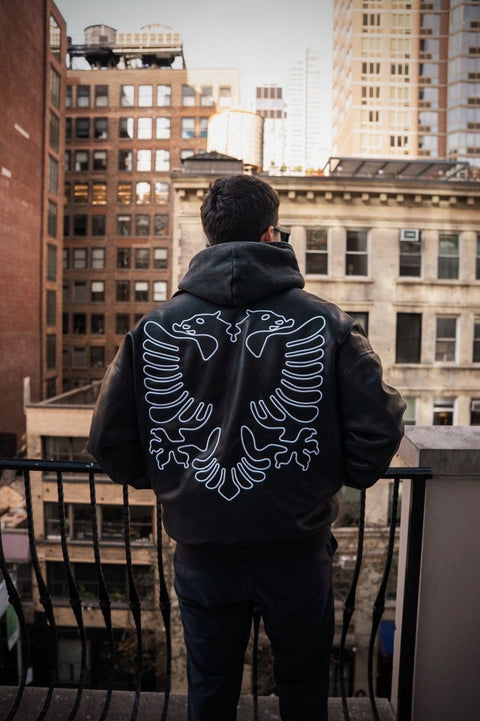
That's exactly why we created the Albanian Eagle Jacket. Not as merchandise. Not as a novelty. As a way to wear what the flag means, confidently, stylishly, everywhere.
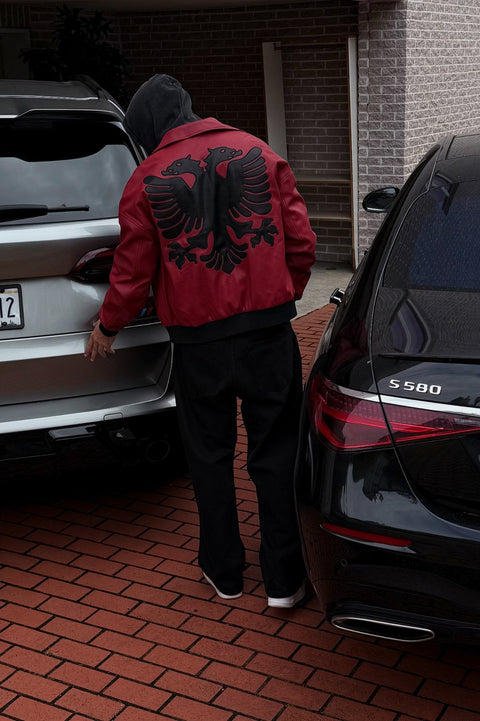
The full double-headed eagle embroidered on the back. Red and gold on black. A bomber jacket silhouette that works in the city, at the wedding, at the airport, anywhere you want to be seen and recognized. As worn by Trey Songz, Drake, and thousands of Shqiptare worldwide. 443+ jackets delivered to Albanian families in 19+ countries. Every one of them carrying the same eagle Skanderbeg raised in 1443.
It comes in two editions:
- Black Eagle Jacket, $129, The original. Black satin bomber with the red-and-gold eagle. The one that started everything.
- Red Eagle Jacket, $129, The bold edition. Red satin body, full eagle on back. For when subtle isn't an option.
More Ways to Wear the Eagle
The jacket is the statement piece. But we built an entire collection around Albanian pride:

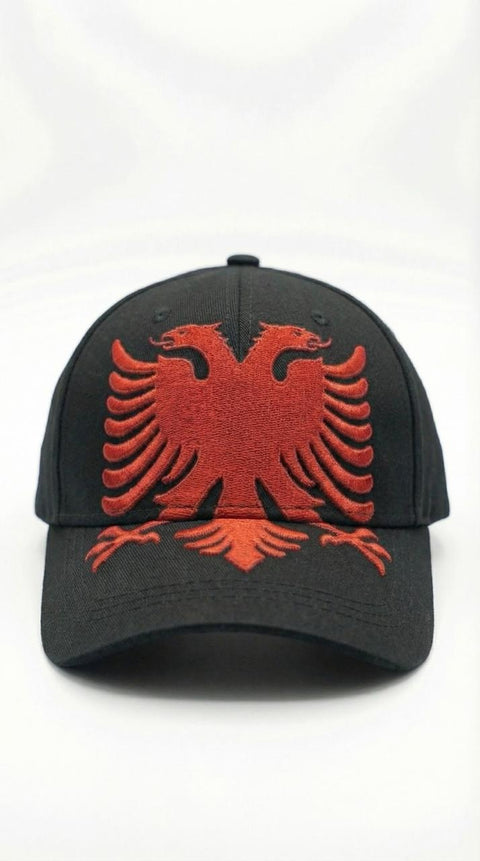
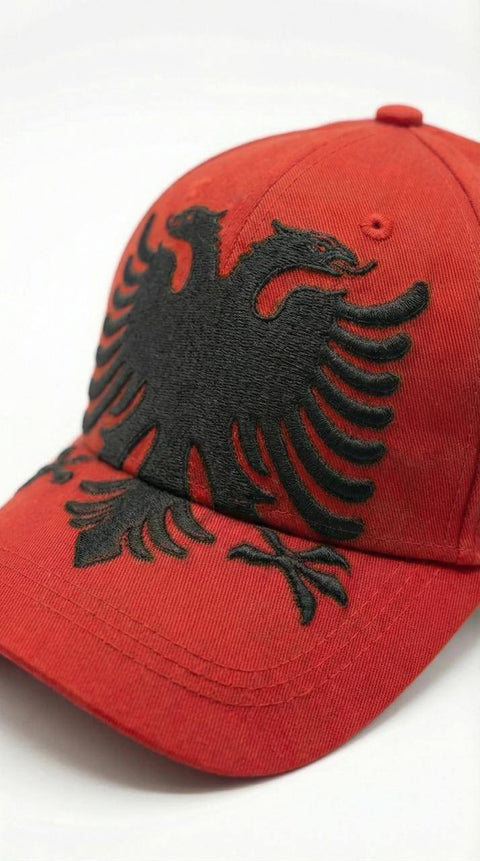
Albanian Eagle Hat, $34
Daily wear. The eagle on your crown. Available in black and red.

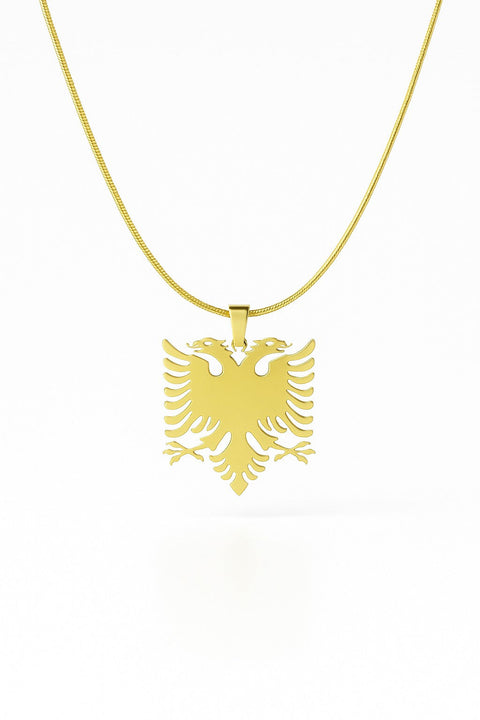
Albanian Eagle Pendant, $20
The eagle close to your chest. Subtle enough for the office. Albanian enough for nana to tear up.

The Future of Albanian Heritage in Fashion
This is just the beginning. As more Albanian designers, artists, and creators step into the spotlight, expect to see the eagle evolve, new interpretations, new mediums, new platforms. But the core will stay the same: pride, strength, and unbreakable unity.
The double-headed eagle isn't a trend. It's a legacy. And we're just getting started.
Behu krenar. Hajde.
Frequently Asked Questions
What does the Albanian double-headed eagle symbolize?
The double-headed eagle represents Albanian identity, resilience, and pride. Its two heads symbolize vigilance, one looking East, one looking West, reflecting Albania's position at the crossroads of civilizations. It has been the national symbol since Skanderbeg raised it in the 1400s during 25 years of resistance against the Ottoman Empire.
Why is the Albanian eagle double-headed?
The double-headed eagle originates from ancient Byzantine and Hittite traditions, representing sovereignty and the unity of East and West. For Albanians, the two heads carry cultural meaning: one honors the past (ancestors, heritage, homeland) and one looks to the future (diaspora, growth, legacy).
What does Shqiptar mean?
Shqiptar is what Albanians call themselves, it translates to "Sons of the Eagle" (or "Children of the Eagle"), derived from the Albanian word shqiponje meaning eagle. The connection between Albanians and the eagle is literal, it's embedded in the name.
Can non-Albanians wear the Albanian eagle?
Absolutely. Albanian pride welcomes everyone who respects the culture. The eagle represents identity, family, and resilience, values that transcend nationality. If it speaks to you, wear it proud.
Who is Skanderbeg?
Gjergj Kastrioti Skanderbeg (1405-1468) was an Albanian nobleman and military commander who led a 25-year resistance against the Ottoman Empire. He united Albanian tribes under the double-headed eagle flag and is considered the national hero of Albania. His resistance is one of the most remarkable military campaigns in European history.