When you hear "Balkan fashion," what comes to mind? For many, it's a single image, but the reality is far richer. The Balkans aren't a monolith, and neither is the style that emerges from this crossroads of cultures. From the mountains of Albania to the coasts of Croatia, each nation brings its own symbols, colors, and stories to the table. Understanding these differences isn't just about geography, it's about honoring the distinct identities that make Balkan fashion so vibrant and diverse.
At Hajde Zemer, we celebrate Albanian heritage through modern streetwear, but we recognize that our neighbors have their own powerful traditions. Let's explore what sets Albanian fashion apart, and what connects us all across the region.
The Balkan Fashion Landscape: A Tapestry of Cultures
The Balkans sit at the intersection of East and West, Ottoman and Austro-Hungarian influence, Mediterranean warmth and Alpine resilience. This geographic and historical complexity means that Balkan fashion is never one-size-fits-all.
Each country developed distinct traditional dress codes shaped by climate, trade routes, religion, and politics. These differences persist today, not just in folk costumes displayed at festivals, but in the modern cultural fashion choices people make every day.
What Unites Balkan Style
- Bold embroidery and intricate patterns, across the region, detail matters
- Strong color symbolism, red, black, white, and gold appear everywhere, though meanings shift
- Pride in heritage, whether Albanian, Serbian, Greek, or Croatian, people rep their roots
- A blend of tradition and modernity, streetwear meets symbols passed down through generations
But within these commonalities, the differences tell the real story.
Albanian Fashion: The Eagle's Distinct Identity
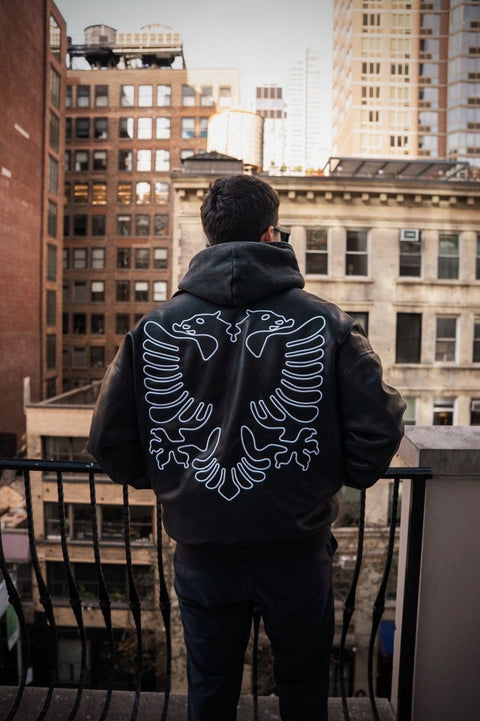
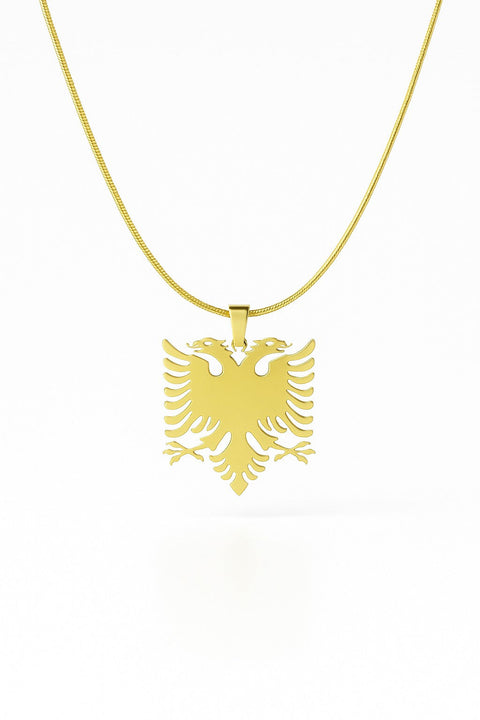
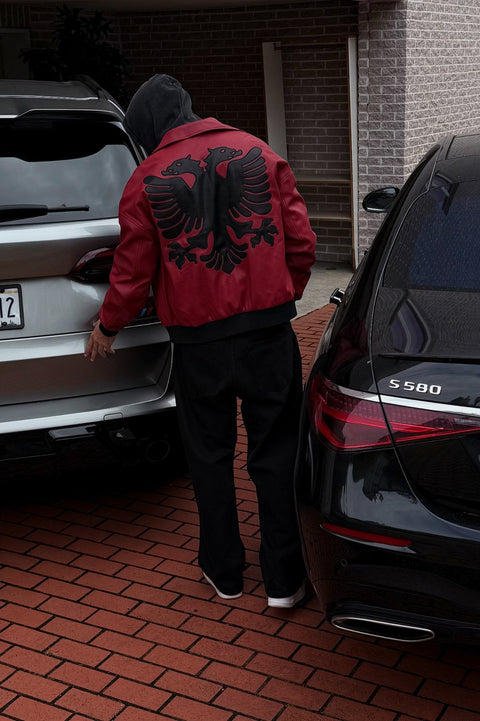
Albanian fashion stands apart through its fierce independence and distinct symbolism. The double-headed eagle isn't just a logo, it's a statement of resilience, unity, and centuries of survival against empires that tried to erase Albanian identity.
Key Elements of Albanian Style
- The double-headed eagle, our most recognizable symbol, representing sovereignty and pride
- Red and black color palette, the national colors carry weight in every design
- Plis and qeleshe motifs, traditional Albanian hats that connect modern designs to ancient roots
- Illyrian heritage references, patterns and symbols that predate even the Roman Empire
- Mountain-to-coast versatility, from the rugged north to the Mediterranean south, Albanian style adapts
Our traditional clothing, like the xhubleta (bell-shaped skirt) or the fustanella (white kilt worn by men), differs significantly from neighboring countries. These aren't costumes you'll find in Greece or Serbia. They're uniquely ours, and when we incorporate these elements into streetwear, we're making a statement: we're here, we're distinct, and we're not going anywhere.
Learn more about the deep roots of Albanian heritage and how it shapes modern design.
Regional Style Differences Across the Balkans
To truly appreciate Albanian fashion, it helps to understand how our neighbors express their own identities through style. Each nation has its own visual language.
Serbian Fashion
Serbian traditional dress features the šajkača (flat cap) and opanak (traditional shoes with pointed toes). The embroidery tends toward geometric patterns in red, blue, and gold. Modern Serbian streetwear often incorporates Cyrillic script and Orthodox Christian symbols, a clear distinction from Albania's majority Muslim heritage and Latin alphabet.
Croatian Fashion
Croatian style, especially along the Dalmatian coast, shows Mediterranean and Venetian influence. The šibenik button (a distinctive silver fastener) and the licitar heart (a decorative symbol) are uniquely Croatian. Their red-and-white checkerboard pattern (šahovnica) is as recognizable as Albania's eagle, but the aesthetic is lighter, more coastal-inspired.
Greek Fashion
While Greece shares the fustanella with Albania, their interpretation differs, particularly in the evzone uniform worn by presidential guards. Greek key patterns, olive branches, and Spartan helmet motifs dominate their heritage fashion. The overall vibe leans more toward ancient classical history, while Albanian fashion reaches back to the Illyrians and emphasizes medieval resistance.
Bosnian Fashion
Bosnia's complex history creates a unique fusion in its cultural fashion. Ottoman influence runs deep, with traditional dimije (baggy trousers) and fes (red caps) still present in ceremonial dress. The diversity of Bosnia's population means you'll see Orthodox, Catholic, and Islamic influences coexisting, unlike Albania's more unified visual identity.
Why These Differences Matter in Modern Streetwear
You might wonder: why does any of this matter for a hoodie or a graphic tee? Because authenticity is everything in cultural fashion. When you wear an Albanian eagle, you're not just wearing any Balkan symbol, you're representing a specific story, a specific struggle, a specific triumph.
The details matter. A Serb wearing a šajkača-inspired cap is making a different statement than an Albanian wearing a plis. A Croatian rocking the šahovnica checkerboard is celebrating a different heritage than someone wearing the Albanian red and black.
How Hajde Zemer Honors Albanian Distinctiveness
We don't blur the lines. Our designs are unapologetically Albanian, not "generic Balkan." Every symbol, every color choice, every reference point connects back to our specific cultural roots. When you wear Hajde Zemer, you're repping:
- The Albanian eagle, not the Serbian or Russian one
- The red and black of Skanderbeg's flag, not any other Balkan nation's colors
- Illyrian heritage, the original people of this land
- Modern Albanian diaspora pride, from Kosovo to New York, we're one tribe
Browse our collections to see how we translate heritage into wearable pride.
The Global Albanian Community: Style Without Borders
Here's what makes Albanian fashion truly unique in the Balkan context: we're everywhere. The Albanian diaspora spans the globe, Kosovo, Macedonia, Montenegro, Greece, Turkey, Italy, Germany, Switzerland, the UK, the US, Canada, Australia. Wherever we land, we bring our symbols with us.
This creates a modern Balkan fashion phenomenon: Albanian style isn't tied to one geographic location. It's a global identity marker. A kid in the Bronx wearing an eagle tee is connected to someone in Pristina, someone in Tirana, someone in Melbourne. The symbol travels because the pride travels.
Other Balkan nations have diasporas too, of course, but few have maintained such a unified visual identity across borders. The Albanian eagle has become a universal signal: I know where I come from, and I'm proud of it.
Respecting All Balkan Heritages While Celebrating Our Own
Understanding these regional differences doesn't mean ranking them. Each Balkan nation has a rich cultural wardrobe and a valid reason to celebrate it. The goal isn't to say "Albanian fashion is better", it's to say "Albanian fashion is distinct, and that distinction deserves to be recognized and preserved."
When brands lump all Balkan heritage into one vague category, they erase the specific histories that make each culture powerful. When someone wears an Albanian symbol without understanding its meaning, they're treating it like a generic "Eastern European aesthetic", and that does a disservice to everyone.
We're not gatekeeping. We're educating. We want people to know what they're wearing and why it matters. That respect goes both ways, we honor our Serbian, Croatian, Greek, and Bosnian neighbors by acknowledging their own distinct stories.
The Future of Balkan Fashion: Unity in Diversity
The next generation of Balkan fashion won't be about erasing differences, it'll be about celebrating them louder. As the diaspora grows and global interest in heritage fashion increases, we have an opportunity to educate the world about the richness of our region.
Albanian fashion will continue to evolve, blending modern streetwear sensibilities with ancient symbols. But the core will remain: we are Albanian, and that means something specific. It's not diluted, not generic, not "Balkan-inspired." It's Albanian, through and through.
And that's what Hajde Zemer is here to deliver, clothing that honors our distinct heritage while looking forward to a future where Albanian pride is worn openly, globally, and unapologetically.
Explore Albanian Style
Ready to rep your roots with authenticity? Our collections are built for those who know where they come from and aren't afraid to show it. Every piece tells a story, make sure it's your story.
Shop Hajde Zemer and rock it with pride. Because Albanian fashion isn't just Balkan fashion, it's something all its own.